 爪機版
爪機版 我们吟唱的山谷,我们飞翔的天空
#4526 《Introducing the Medieval Dragon》翻譯 » 2021-04-03 18:14:25

回应:
Introduction
The earliest attested dragon in medieval English literature makes his debut in style by wreaking fiery havoc from the skies on the unsuspecting inhabitants of Geatland in southern Sweden. The sudden attack is due to the fact that the dragon’s centuries-long repose has been disturbed by a fugitive serf who steals a golden cup from the dragon’s hoard to appease the anger of his master. This theft, however, arouses the wrath of the dragon, who scours the landscape in search of the thief and burns homes, villages and even the great hall of Beowulf, their king. The Old English poem then continues to relate the hoary warrior-king’s last fight against the monstrous foe to save his people and to rid the land of this menace. He and his nephew Wiglaf succeed in killing the dragon, yet shortly afterwards Beowulf succumbs to the poison spreading from the wound he contracted during the battle. The Beowulf dragon is not only one of the earliest medieval dragons, but also one of the most typical ones. It has wings and is able to fly, breathes fire, jealously guards a hoard inside a barrow, can only be killed by a well-aimed thrust at its unprotected underside, and its bite is poisonous. These are all features that most
modern Draca sceal on hlæwe, / frod, frætwum wlanc.
A dragon must live in a barrow, / old and proud of his treasures.
(Maxims II, lines 26b–7a)
#4527 《Introducing the Medieval Dragon》翻譯 » 2021-04-03 18:02:02
回应:
引言
Ðá se gæst ongan glédum spíwan,
beorht hofu bærnan· bryneléoma stód
eldum on andan· nó ðaér áht cwices
láð lyftfloga laéfan wolde·
Then the demon began to spew flames,
to burn bright houses; the gleam of fire rose
to the horror of the men; nor there anything alive
the hateful air-flier wished to leave;
《貝奧武夫》第2312-2315行
被確證最早出現在中世紀英國文學中的龍,是以從空中對瑞典南部吉特蘭毫無戒備的居民進行猛烈的破壞的方式首次出現的。這突如其來的襲擊歸因於一個逃亡的農奴打擾了龍長達數世紀的休息——這個農奴從龍的寶庫中偷走了一個金盃,以平息他的主人的怒火。然而,這個小偷卻引起了巨龍的憤怒,巨龍血洗了周圍的土地以尋找小偷,並燒燬了房屋,村莊甚至是國王貝奧武夫的大廳。這首古老的英國詩歌接着講述了關與這位白髮蒼蒼的勇士國王爲了拯救他的人民、解除這片土地上的威脅而與可怕的敵人進行最後一戰的故事。 他和他的侄子威格拉夫成功殺死了巨龍。但不久之後,貝奧武夫死於毒素在他在戰鬥中受的傷中的擴散。
《貝奧武夫》中的龍不僅是最早的中世紀龍,也是中世紀龍中最具代表性的之一。它有翅膀,能夠飛翔、噴出火焰,小心翼翼地保護着埋在古冢裏的寶藏,只能瞄準刺向它的沒有防護的腹部才能殺死它,而且它的撕咬是有毒的。然而,這所有讓大多數當代讀者聯想到中世紀龍的原型的特徵,很少同時出現在中世紀文獻中。例如古英語《箴言集II》中把“看守古冢中的寶藏”作爲定義龍的特徵,而沒有提及任何其他的特徵:
Draca sceal on hlæwe, / frod, frætwum wlanc.
A dragon must live in a barrow, / old and proud of
his treasures.
龍必須住在一個古墓裏,它年長並且爲自己擁有的財富而感到驕傲。
《箴言集II》第26b-27a行
#4528 《Introducing the Medieval Dragon》翻譯 » 2021-04-03 18:00:59
回应:

這本書是我在去年年初的時候瞭解到的,看起來寫得比較專業。所以打算看一遍並且把它進行翻譯,不過由於那時沒精力且英語水平不足(很多時候要用機翻輔助),所以就沒翻譯多少,到現在只翻譯了引言。
這本書的介紹和序已經發到龍百科上了,這裏就不再發了。
同時我也把英文原文發在下面,以供對照。本龍英語翻譯水平不佳,如果發現有錯誤,望在貼子裏指出,或者短消息告訴我。 ![[微笑]](/forum/img/smilies/haku/haku-smile.svg)
當然也歡迎大家在這裏討論本書內容。
有 4 位朋友喜欢这篇文章:龍爪翻書, 卷册龙, peter860321, 镜中龙影
#4529 各位理想龍身的居所是怎樣的? » 2021-04-03 07:39:18
![[傻笑]](/forum/img/smilies/haku/haku-simper.svg)
![[驚訝]](/forum/img/smilies/haku/haku-suprise.svg)
#4531 大家的指甲長度?會因為喜歡龍而特意留長指甲嗎? » 2021-04-03 01:10:03

回应:
[↑] @barufaruku 寫道: 反正我的屏幕也是碎的,一點偏移已經無所謂了. 平常都是拿筆不方便再剪 …
如果用觸摸筆的話那確實根本不會受到影響了(攤爪)
#4532 各位理想龍身的居所是怎樣的? » 2021-04-03 01:09:15
#4534 龍畫廊目錄 » 2021-04-03 01:06:19
回应:
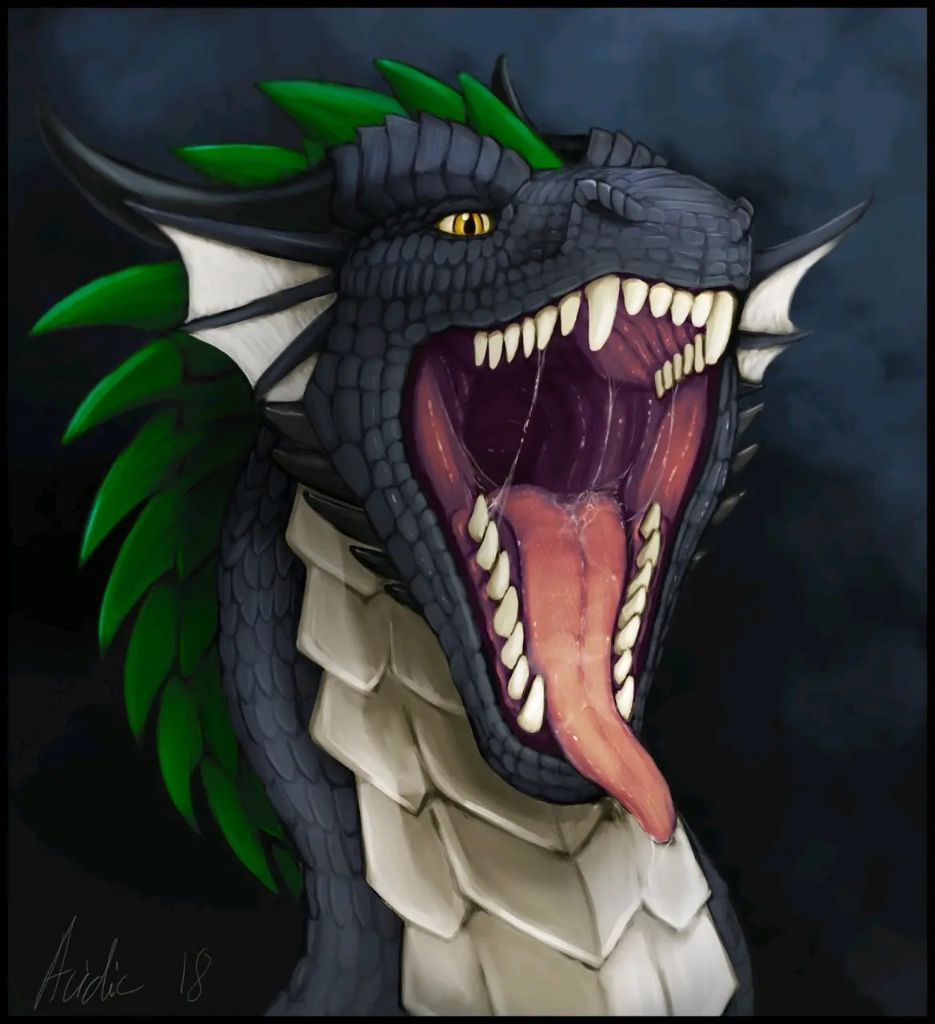
再發一個最近看到的作者
FA: https://www.furaffinity.net/gallery/acidic/
擅長畫龍嘴,雖然也會畫一些別的生物的口部
有 1 位朋友喜欢这篇文章:龍爪翻書
#4535 延遲爆表的新龍報道(? » 2021-04-03 01:05:06
回应:
是紫金啊,歡迎
其他也不知道說啥(
祝你早日找到可愛的雌龍? ![[裝酷]](/forum/img/smilies/haku/haku-cool.svg)
#4536 大家的指甲長度?會因為喜歡龍而特意留長指甲嗎? » 2021-04-03 00:59:57
回应:
[↑] @barufaruku 寫道: 我倒是很喜歡長指甲打在屏幕上那種劈里啪啦的感覺 …
太長的話會讓觸點位置偏移的,我比較懶,一般到那種時候纔想起來該剪指甲了
#4538 大家的指甲長度?會因為喜歡龍而特意留長指甲嗎? » 2021-04-03 00:53:18
回应:
沒辦法,要用手機的嘛……![[暈]](/forum/img/smilies/haku/haku-dizzy.svg) 指甲太長很難受
指甲太長很難受

![[害羞]](/forum/img/smilies/haku/haku-shy.svg)
#4541 延遲爆表的新龍報道(? » 2021-04-02 13:40:18

#4542 延遲爆表的新龍報道(? » 2021-04-02 12:32:05
![[靈感]](/forum/img/smilies/haku/haku-idea.svg)
#4543 跟時事有關的龍圖 » 2021-04-02 07:55:51
#4544 延遲爆表的新龍報道(? » 2021-04-02 00:31:19
#4545 各位理想龍身的居所是怎樣的? » 2021-04-01 20:17:13
#4546 各位理想龍身的居所是怎樣的? » 2021-04-01 19:48:40
回应:
叢林山腰上的洞穴,海底的洞穴,感覺都很棒,但是如果實在找不到好地方,挑一朵雲小住一下也是不錯的(突然腦洞會不會有龍住在臺風眼裏)
![[被雷]](/forum/img/smilies/haku/haku-shock.svg) 在羣裏日常活動然後突然跑到鱗目來的感覺也太怪了(因爲好多龍都是先到鱗目的?)。 …
在羣裏日常活動然後突然跑到鱗目來的感覺也太怪了(因爲好多龍都是先到鱗目的?)。 …